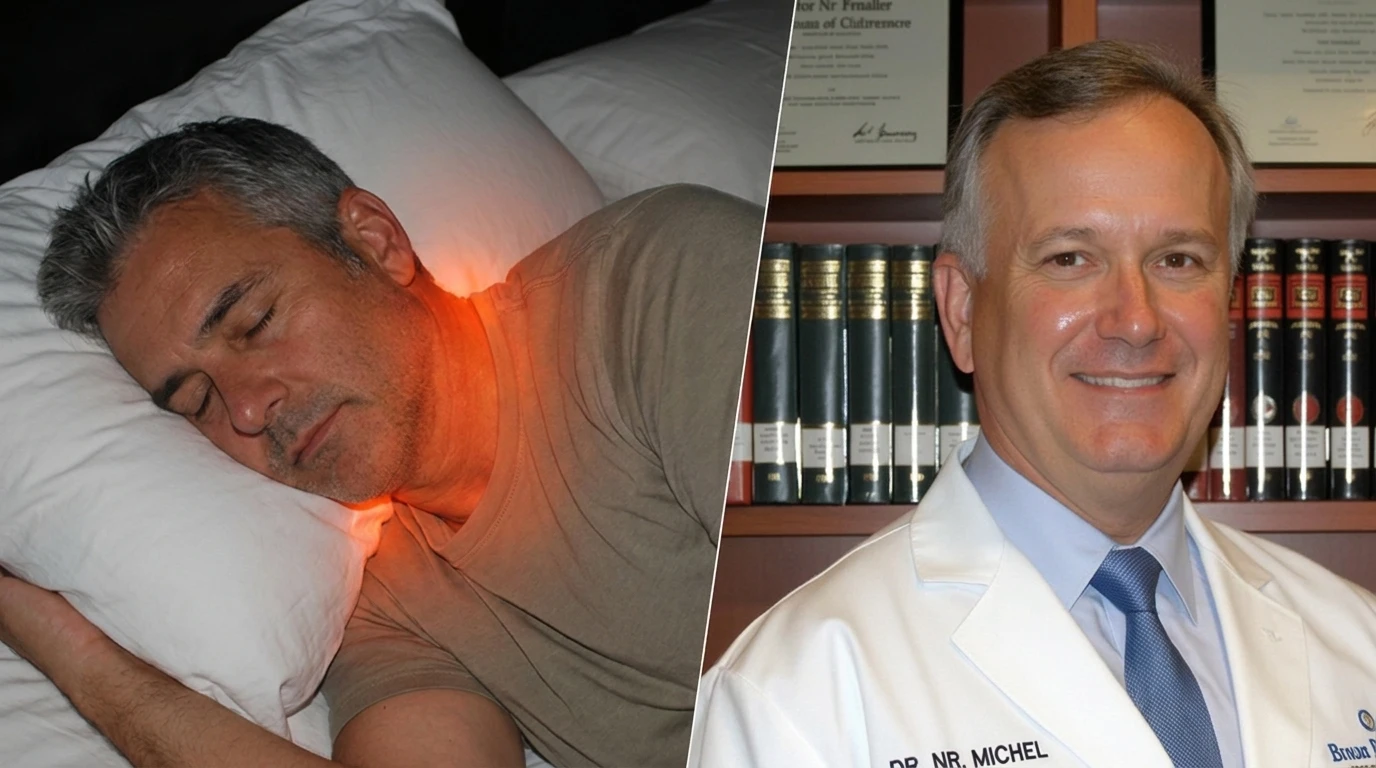
Doctors, Chiropractors, and Even Orthopedic Surgeons Have Been Treating Morning Neck Pain All Wrong…
I've been a board-certified chiropractor for 11 years.
I've watched hundreds of patients over 40 get trapped in the same devastating cycle:
What starts as morning stiffness that fades before noon… progresses to chronic aching that follows you the entire day… then headaches before your alarm, sharp shoulder pains, and a surgeon mentioning fusion.
But what I discovered from Johns Hopkins five months ago didn't just change my patients' lives - it changed mine.
Chronic neck pain doesn’t come from the spine or muscles, but what’s in between.
Today, I'm breaking my silence.
What I'm about to share could have you waking up tomorrow morning, rolling your neck freely - without a single wince of pain.

David, a 53-year-old contractor, sat in my office five months ago, defeated.
He had been my patient for three years. What started as minor morning stiffness at 50 became a locked neck every morning by 52.
By 53, he couldn't check his blind spot driving — and he'd started getting headaches that lasted past noon.
Now he was facing two brutal choices: possible fusion surgery, or "learn to live with it."
Here's what crushed me — he tried everything:
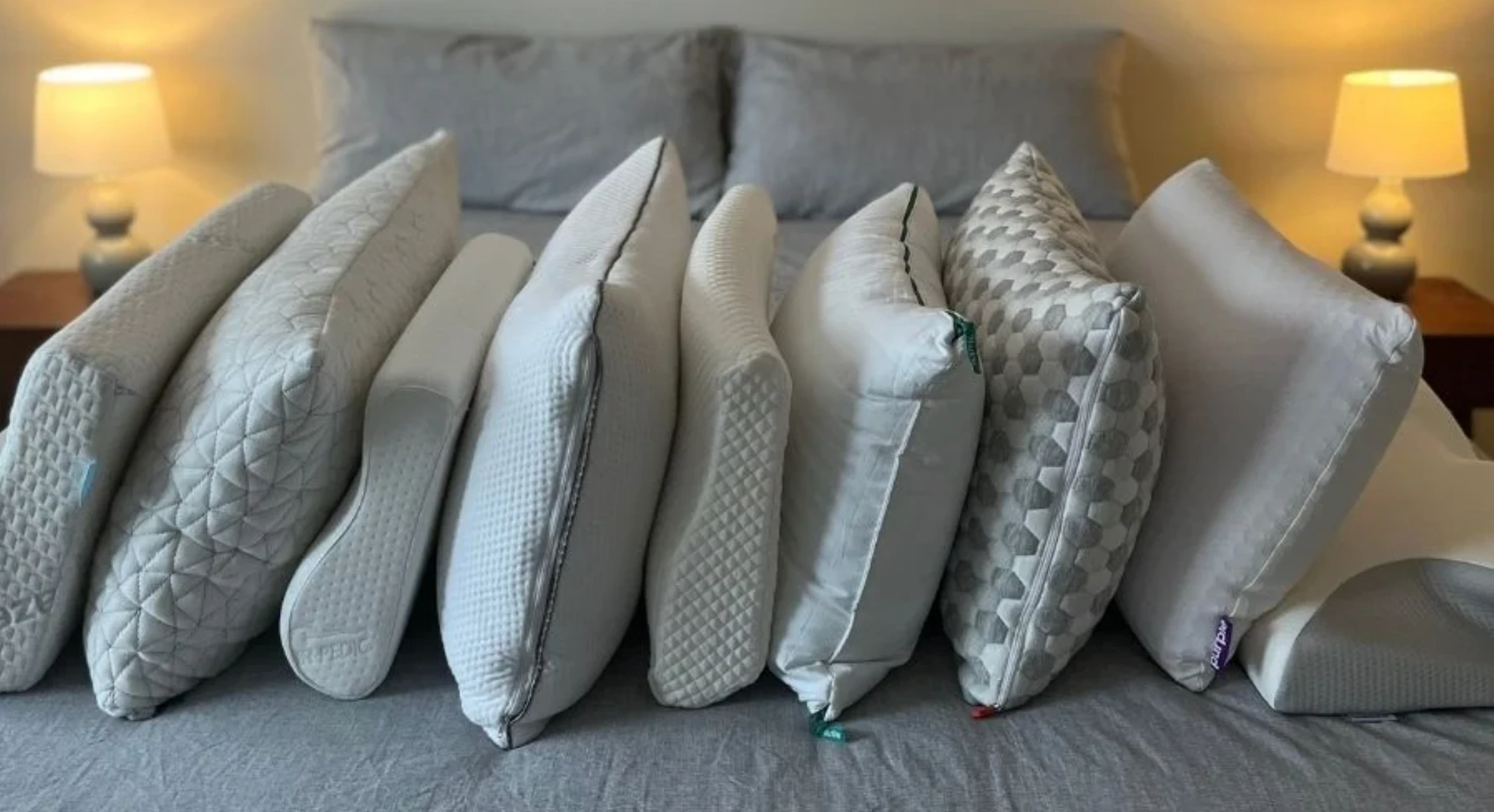
Nothing worked. A few gave temporary relief, but the neck pain always came back worse. And kept getting worse every month.
He stretched every day. Foam rolled.
He bought four different pillows in one year. A $2,200 mattress.
Nothing could stop the stiffness in the morning.
"My doctor told me only surgery could fix it," he told his wife. "Maybe he's right."
But this Johns Hopkins discovery proved David's doctor wrong.
Because something inside his neck had been hardening every single night, strangling the muscles and nerves.
Like a snake squeezing its prey.
Why do some people sleep fine into their 70s while others can barely turn their head by 45?
The difference has nothing to do with fitness, posture, or aging.
I started researching what happens inside the neck during sleep.
And that's when I found a Johns Hopkins report on a tissue I learned about in school but never once thought to examine.
It stopped me cold.

Here's the truth nobody tells you:
Your morning neck pain isn't a muscle problem. It isn't a joint problem.
It's a fascia problem.
Fascia is a single tissue that wraps every muscle, nerve, and bone in your body.
Scientists dismissed it for decades. Cut through it in every surgery without a second thought.
But Johns Hopkins found that fascia is far more important than anyone thought.
During the day, it's slippery. Fluid. Everything glides.
But during sleep — held under strain for hours — it hardens. Like wet cement drying overnight.
By morning, the fascia in your neck is knotted. Wrapped tightly around the muscles and nerves underneath. Squeezing them.
That's the locked neck at 6am. And that's why it fades throughout the day — because movement softens fascia.
I'd been adjusting David's spine and muscles twice a month for three years.
But the fascia was hardening every night, rebuilding everything I’d loosened.
Three years of adjustments. And I was never treating the actual cause.
It wasn't a problem when he was younger.
Fascia bounces back when you're young.
But after 40, fascia loses its elasticity. It hardens faster. Recovers slower.
And the damage from thousands of nights starts compounding.
I shared these findings on my clinic's Facebook page. The post exploded — hundreds of people over 40 said they had the exact same morning neck pain pattern.
Two weeks later, I was at the American Chiropractic Association conference in Atlanta. During a break, a woman approached me at the coffee station.
"Dr. Buchanan? I saw your post about fascia hardening during sleep. I'm Dr. Lisa Chen, biomedical engineer at Johns Hopkins. My team has been studying this exact problem for three years."
She pulled up data on her phone — sleep studies, fascia imaging, before-and-after scans of neck tissue in patients over 40.
"We've confirmed that fascia hardens in the neck faster than anywhere else in the body during sleep," she said. "And we found out why."
Your body moves 40 to 50 times a night. Each shift keeps fascia fluid throughout your body.
But the neck carries the full weight of your head. Every shift puts it right back under strain.
"Forty resets for the body. Forty knots for the neck," she said.
"That's why nothing on the market works. Every pillow supports the neck in one position. But you move 50 times. The support has to adapt through every movement."
I was skeptical. I've heard every pillow pitch imaginable.
But then she showed me their solution.
Her team had developed an 3-in-1 Nanocoil System specifically designed to keep fascia fluid through all 40 to 50 nightly movements.
They call it the Nuzzle Pillow.
That's it.
No gimmicks. Just engineering built around what Johns Hopkins found fascia actually needs.
When every shift becomes a reset, the fascia stays fluid all night.
When the fascia stays fluid, the muscles and nerves stop being squeezed.
You can wake up without the stiffness.
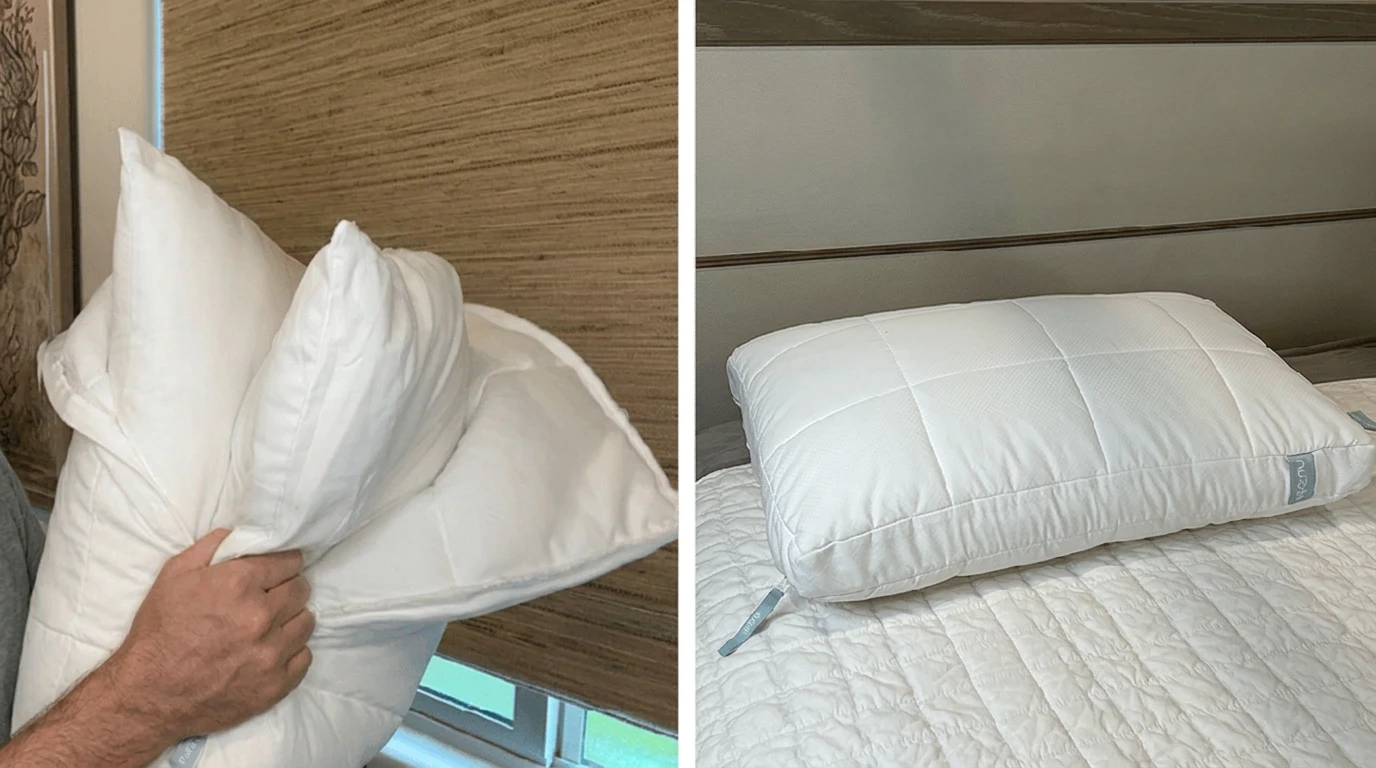
I ordered two Nuzzle pillows. They arrived three days later.
The moment my head hit the pillow, I felt it: my neck was actually supported. Not locked in one position — supported.
The real test came the next morning.
I turned my head. No grinding. No locking. No stiffness.
The morning ritual I'd accepted as normal — the slow turn, the careful stretch, the hot shower just to loosen up — none of it was necessary.
For the first time in years, my neck felt normal at 6am.
I immediately had David try the second pillow.
Within the first week, his call to my office was ecstatic:
"Dr. Buchanan, I woke up and turned my head without thinking. No pain. I can't believe it."
I told him to keep me updated.
Week two: "The morning stiffness is completely gone. I'm not even thinking about my neck anymore."
Week four: "I checked my blind spot driving without flinching. Haven't been able to do that in two years. And the headaches? Haven't had one in three weeks. I didn't even realize they were connected to my sleep."
Month three: David came in for a routine visit. I watched him move through his range of motion — full mobility, no wincing, no guarding.
"I forgot what this felt like," he said.
He cancelled his surgery consultation. Didn't need it anymore.
That was five months ago. David still uses his Nuzzle pillow every night. Still pain-free.
The results in my practice speak for themselves.
I've recommended Nuzzle to over 200 patients, from mild morning stiffness to chronic neck pain, tension headaches, and numbness down the arm.
Here's what they're experiencing:



You've already lost too many mornings to neck pain.
You've tried sleeping on your back. You've tried pillow after pillow. You've iced and heated and stretched.
This isn't just about better sleep. It's about stopping the fascia from hardening inside your neck every single night.
That's why I worked directly with Dr. Chen's Johns Hopkins-backed team to secure a limited batch for my patients and readers:
1 Nuzzle Pillow: $98.00 Just $49.00 (Save $49.00)
At $39 each, you're spending less than one "orthopedic" pillow.
But you're getting 1,000+ nights of pain-free side sleeping.
This exclusive pricing is guaranteed for the first 200 readers only. After that, they're back to $98.

Sleep on Nuzzle for 90 nights.
If the stiffness doesn't fade. If the knots don't loosen. If your mornings don't change.
Send it back for a full refund. No questions asked.
You only pay if it works.

I've been treating neck pain for 11 years.
I've helped thousands of patients find relief in my office.
But I could never fix what was happening during those 7 hours after they left.
Now I can.
Nuzzle is the first thing I've found that addresses the actual cause — the fascia hardening inside your neck every night.
It's not a replacement for professional care. It's the missing piece that finally makes everything else stick.
Every night without it is another 7 hours of fascia tightening around the muscles and nerves in your neck.
Click below to try Nuzzle risk-free for 90 days. Over 500 clinicians — myself included — now recommend it.
Your mornings could feel different by this weekend.